
Chemical Dangers

Lead exposure indoors poses a serious health risk, especially for older adults and young children. Lead can be absorbed into the body through paint dust, contaminated soil, and drinking water, and it builds up in the body over time. Once absorbed, lead can cause damage to the brain and other vital organs, including the kidneys, nerves, and blood. Homes built before 1978 are the most likely to contain lead-based paint, and homes built before 1986 are more likely to have lead pipes, fixtures, and solder in their plumbing.
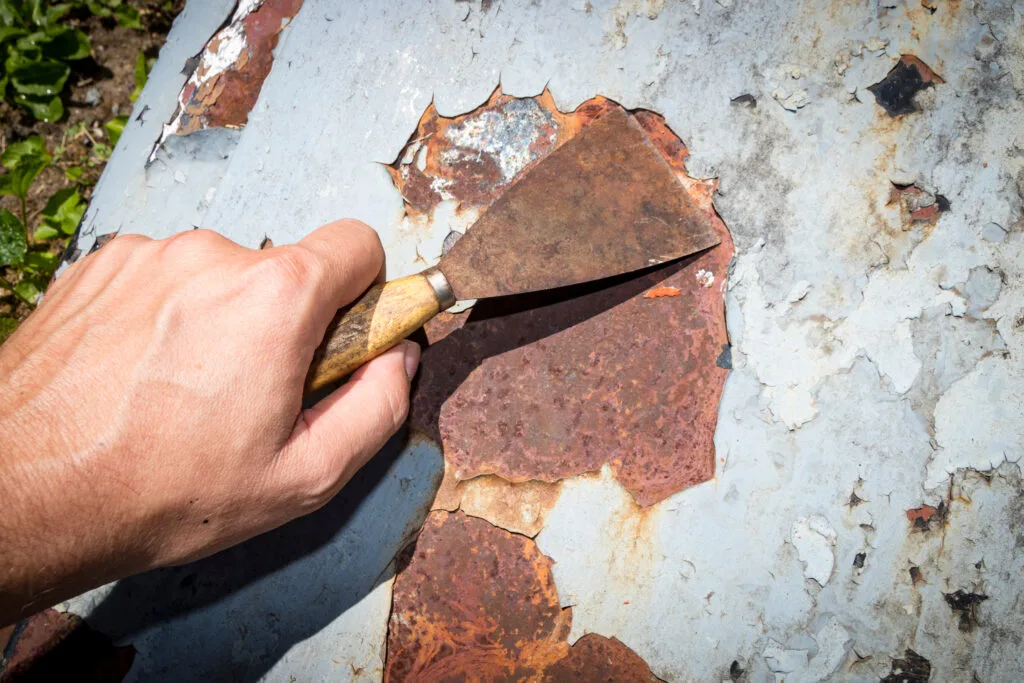

Lead-based paint is still present in millions of homes, often hidden beneath layers of newer paint. It becomes a hazard when it is peeling, chipping, chalking, cracking, damaged, or damp — especially on surfaces that get a lot of wear, like windows, window sills, doors, door frames, stairs, railings, banisters, and porches. Lead dust can also form when these surfaces rub together or during home repairs, and it can be tracked indoors from contaminated soil. Lead can additionally enter drinking water when pipes, faucets, and fixtures that contain lead corrode. According to the CDC, there is no safe level of lead in drinking water. The Department of Housing and Urban Development estimates that roughly 35 percent of U.S. homes contain some lead-based paint.
Lead can come from dust, paint, and soil. Homes built before 1978 are the most common homes to have lead paint inside of them. Lead-based paint hazards may also be found on windows and window sills, doors and door frames, and stairs, railings, banisters, and porches — surfaces that children can chew or that get a lot of wear-and-tear.
Deteriorating lead-based paint (peeling, chipping, chalking, cracking, damaged, or damp) is a hazard that needs immediate attention. Lead in household dust also results from indoor sources such as old lead-based paint on surfaces that are frequently in motion or bump/rub together (like window frames).
The best way to learn if your drinking water supply has a risk of lead is to have it tested. You'll find a list of state-certified laboratories on the EPA website, or you can call the Safe Drinking Water Hotline at 1-800-426-4791. For paint, dust, and soil, testing should be done by a certified lead professional.
Some symptoms of lead poisoning may include headaches, stomachaches, nausea, tiredness, and irritability. Children who are lead poisoned may show no symptoms. In adults, symptoms include muscle weakness, pain, paresthesia ("pins and needles"), nausea or vomiting, and diarrhea or constipation. Higher levels of lead can also cause loss of concentration, memory loss, depression, joint and muscle pain, fatigue, high blood pressure, nausea, poor appetite, kidney damage, and damage to the nervous and reproductive systems.
To permanently remove lead hazards, you must hire a certified lead "abatement" contractor. Abatement methods include removing, sealing, or enclosing lead-based paint with special materials — just painting over the hazard with regular paint is not enough. You can temporarily reduce lead hazards by repairing damaged painted surfaces and planting grass to cover soil with high lead levels, but these are not permanent solutions and need ongoing attention.
Contact the National Lead Information Center (NLIC) for help locating certified contractors in your area and to see if financial assistance is available. Always hire someone with special training for correcting lead problems — someone who knows how to do the work safely and has the proper equipment to clean up thoroughly.
Yes: